[subtitle]Resist the temptation. Your future self will thank you. [/subtitle]
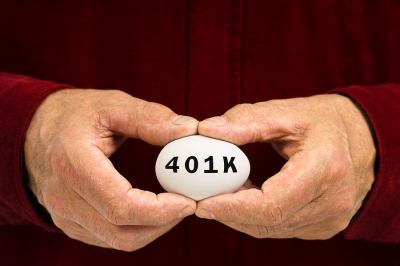
Retirement accounts are not bank accounts. Nor should they be treated as such. When retirement funds are drawn down, they impede the progress of retirement planning, even if the money is later restored.
In a financial crush, a retirement account may seem like a great source of funds. It is often much larger than a savings account; it is technically not a liquid asset, but it can easily be mistaken for one.
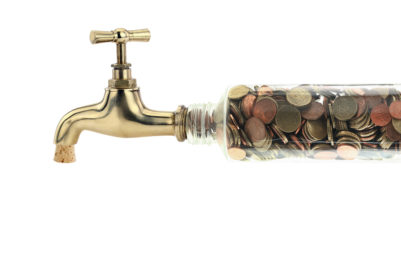
The central problem is this: when you take a loan or an early distribution from an IRA or a workplace retirement plan, you are borrowing from your future self. In fact, you may effectively be borrowing more money from your future than you think. Even if you put every dollar you take out back into the account, you are robbing those dollars you removed of the tax-deferred growth and compounding they could have realized while invested.
An early withdrawal will commonly come with a 10% penalty. The Internal Revenue Service does not want you to cash out your retirement account prior to age 59½, so it puts an additional tax on withdrawals from traditional IRAs and employer-sponsored retirement plans that occur before then. (This applies even to withdrawals defined as “hardship distributions,” where the account holder has demonstrated a severe financial dilemma and a lack of other financial sources to address the problem.)1,2
The money exiting the plan is considered a distribution of ordinary, taxable income. So, you will pay regular income tax on the money you take out, plus a penalty equal to 10% of the amount withdrawn.1,3
In the case of a workplace retirement plan, you will not even receive 100% of what you take out. The plan must withhold 20% of the withdrawn funds from you to cover income taxes.2
There is one asterisk worth noting here. The I.R.S. will let you withdraw your contributions to a Roth IRA at any point during your life, tax free and penalty free. Roth IRA earnings, however, are a different story – if you begin to withdraw those earnings before you reach age 59½ and have owned the Roth IRA for at least five years, then regular income taxes and the 10% penalty apply to the distribution.1
Loans come with their own set of issues. Most employer-sponsored retirement plans allow them once you are vested. You can usually withdraw up to $50,000 or 50% of your account balance, whichever is less; the term of repayment is typically five years.1,3
All that may appear very convenient, but you are still borrowing money that could be growing and compounding in the account – with taxes deferred, no less. Moreover, the loan comes with interest and cuts into your take-home pay.3
In some cases, you may feel like you have no choice but to borrow from your employee retirement plan: your back is against the wall financially due to hospital bills, high-interest debts, or other pressures; you lack other financial means to address these pressures; and you certainly do not want to turn to a predatory lender.
If you do take a loan from your workplace retirement plan account, remember two things. One, the loan should not be so large that your monthly household debt approaches 35-40% of your gross income. Two, you should avoid taking a loan if it appears you may leave the company in the coming months. If you quit or are fired, you may need to repay the whole loan balance in as little as 60 days. Any money you fail to repay will be considered a distribution of taxable income to you otherwise.3
All this underscores the need to build an emergency fund. If you have adequate cash on hand for sudden financial crises, you can refrain from taking what should be thought of as a withdrawal or loan of last resort.
Citations.
1 – tinyurl.com/ya42no9v [9/13/17]
2 – forbes.com/sites/financialfinesse/2017/03/16/the-401k-distribution-opportunity-you-need-to-think-twice-about/ [3/16/17]
3 – cnbc.com/2017/04/13/never-pull-money-from-your-401k–except-in-these-3-cases.html [4/13/17]